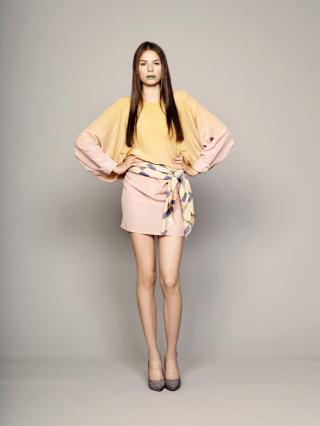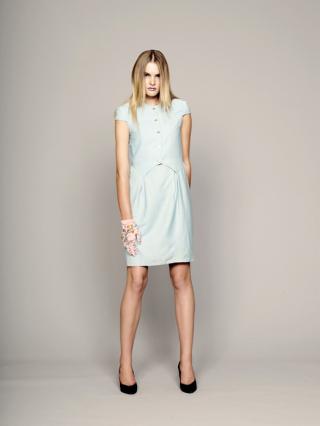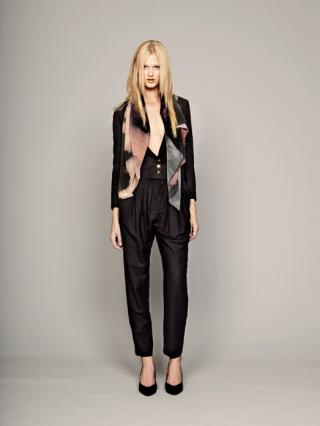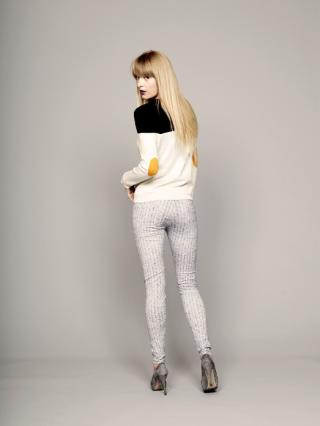
Showing posts with label fashion designer. Show all posts

Tuesday, July 13, 2010

Obsession du Jour

Gabrielle "Coco" Chanel
One of the key designers who made a bold and lasting impression on women's fashion in the twentieth century
Born in Saumur, in the Loire Valley of France, Chanel survived an impoverished childhood and strict convent education. The difficulties of her early life inspired her to pursue a radically different lifestyle, first on the stage, where she acquired the nickname "Coco," and then as a milliner.

With the help of one of the male admirers who would provide key financial assistance and social connections over the course of her career, Chanel opened her first shop in Paris in 1913, followed by another in the resort town of Deauville. Selling hats and a limited line of garments, Chanel's shops developed a dedicated clientele who quickly made her practical sportswear a great success. Much of Chanel's clothing was made of jersey, a choice of fabric both unusual and inspired. Until the designer began to work with it, jersey was more commonly used for men's underwear. With her financial situation precarious in the early years of her design career, Chanel purchased jersey primarily for its low cost. The qualities of the fabric, however, ensured that the designer would continue to use it long after her business became profitable. The fabric draped well and suited Chanel's designs, which were simple, practical, and often inspired by men's wear, especially the uniforms prevalent when World War I broke out in 1914.

Chanel's own lifestyle fueled her ideas of how modern women everywhere should look, act, and dress. Her own slim boyish figure and cropped hair became an ideal, as did her tanned skin, active lifestyle, and financial independence. Throughout her career, Chanel succeeded in packaging and marketing her own personal attitudes and style, making her a key arbiter of women's taste throughout the twentieth century.

Chanel continued to create successful looks for women through the 1920s and '30s. In 1926, American Vogue likened Chanel's "little black dress" to the Ford, alluding to its almost universal popularity as a fashion basic.

Despite her great success, Chanel closed the doors of her salon in 1939, when France declared war on Germany. Other couturiers left the country, but Chanel endured the war in Paris, her future uncertain. Following the end of the hostilities and resolution of some personal difficulties, Chanel found she could not idly stand by and observe the early success of Christian Dior, whose "New Look" prevailed in the postwar period. While many admired Dior's celebration of femininity, with full skirts and nipped-in waists, Chanel felt his designs were neither modern nor suitable for the liberated women who had survived another war by taking on active roles in society. Just as she had following World War I, Chanel set out to rescue and reinvigorate women's fashion.

The designer faced challenges in this endeavor: securing finances, assembling a new staff, seeking out new fabrics, competing at age seventy against a new generation of designers. Chanel's comeback collection of couture debuted in 1953 (1976.370.2a-c). Although it was not a critical success, the designer persevered. Within three seasons, Chanel was enjoying newfound respect. She updated her classic looks, reworking the classic tweed designs until wealthy women and celebrities returned to the showroom in droves. The Chanel suit became a status symbol for a new generation, made of solid or tweed fabric, with its slim skirt and collarless jacket trimmed in braid, gold buttons, patch pockets, and—sewn into the hem—a gold-colored chain ensuring it hung properly from the shoulders. Chanel also reintroduced her handbags, jewelry, and shoes with great success in subsequent seasons.

Following Chanel's death in 1971, several of her assistants designed the couture and ready-to-wear lines until Karl Lagerfeld (born 1938) took over the haute couture design in 1983 and ready-to-wear in 1984. Lagerfeld, like Chanel at the time of her comeback, looked to past designs for the secret to his success. His designs incorporated signature Chanel details, tweed fabrics, colors, gold chains, quilt-stitched leather, and the linked "CC" logo. In later collections, Lagerfeld became more irreverent, deconstructing some of the ladylike polish of Chanel's 1960s looks. Playing with the fact that Chanel's favorite jersey fabric had been used for men's underwear at the turn of the twentieth century, Lagerfeld even incorporated men's T-shirts and briefs into his designs (1993.104.2a-c). Nonetheless, Lagerfeld's ability to continuously mine the Chanel archive for inspiration testifies to the importance of Gabrielle Chanel's contributions to women's fashion in the twentieth century.

 Circa 1935-1937 

Circa 1964

Theater Suit 1938

Evening Ensemble 1936

Circa 1926-1927


"Fashion is not something that exists in dresses only. Fashion is in the sky, in the street, fashion has to do with ideas, the way we live, what is happening." Coco Chanel 

Text: Jessa Krick - The Costume Institute, The Metropolitan Museum of Art 
Video: Vogue

Wednesday, June 30, 2010

I HEART!

Stine Goya
Spring/Summer 2010


Stine Goya combines beauty and drama in edgy collections for the daring individual. collections that don't adhere to current trends but seek authenticity and renewal, grounded in a continual identity with a distinct visual expression. 
this is an expression that appeals to the independent female, whose personal style is an articulation of self. a person who revels in beauty and intense surroundings, she self-assuredly combines clothing to express herself and her character. stine goya's universe extends a modern framework for this individuality.
the single artefacts can, by power of their stylistic prowess, be withdrawn from the unity of the collection, and combined with the woman's wardrobe in a subjective interpretation.  the clothing is sophisticated yet understated.
each collection is founded in a depth of meaning - a visual portrayal of an emotion or tone, inspired by a wide spectrum of contemporary and classical sources that capture the essence and central design values of stine goya. 
innovating and redefining both form and colour but always with an aim for wearability. sophisticated constructions are dominated by structural silhouettes, which refer to the classical, touch upon the avant-garde but always seek to enhance the feminine.
the clean-cut lines found in form are accentuated in a bold use of colour. strong colours are juxtaposed to more subtle nuances in a manner, which inclines toward the artistic. the striking prints are a central characteristic of stine goya. they will often refer to dominant sources of inspiration in addition to capturing the dominant tone of a collection. they are a manifestation of the essence of stine goya:
beauty. drama. colour.  

stine goya graduated from central st. martins, specializing in fashion design with print, in 2005
the first collection, confetti, was presented at the copenhagen and paris fashion week in february 2007.
she now presents in copenhagen, paris, berlin and london and is carrie in prominent stores around the world.


Source: Stine Goya

Tuesday, June 22, 2010

Kim Kardashian in Oriett Domenech

Kim Kardashian 
wore this fabulous white Oriett Domenech one shoulder studded dress to the 7th anniversary party for Vegas Magazine


View more pictures of Oriett Domenech's collection and read interview with the designer, here 

Sunday, June 6, 2010

Interview with Lira Leirner

I had the fabulous opportunity of interviewing london based fashion designer
Lira Leirner
definitely a one to watch!
 1. Who is Lira Leirner?
I'm a fashion designer and writer. I write about fashion and culture, how they influence my creations and general thoughts on the industry itself as well as white-collar crime. But Lira Leirner is also a small couture line of peculiar and beautiful, feminine and demure dresses and will soon include a men’s line.

2. Who is your ideal client?
My ideal client is someone who has a classic style with a twist. Furthermore, a lot of my dresses are meant to underline the sweet and girly, yet demure nature of the wearer and include an understated, not in-your-face, but natural sexiness and beauty.

3. When did you launch your line?
Lira Leirner was founded in December 2009 after a significant, epiphany provoking cultural holiday in Switzerland, including an eye-opening conversation with a banker who made me realise that one should contribute to, not consume one’s passions.

4. Biggest achievement:
Living my own life based on my own merits and hard work, independently.

5. I’m obsessed with…
I’m obsessed with understanding and identifying the spread of criminal intent across social hierarchies and the unbelievably disproportional public awareness on the extent of white-collar crime and its impact on our everyday life in comparison to street crime. I have been researching, reading and writing about this topic for seven years now. And fashion, obviously.


6. Which designer do you admire the most?
SinPatron. He’s a designer from Bilbao, Spain, who I came across online by accident. He is self-taught, like me, and his intricate approach to gorgeous and quirky, unique pieces make my face light up. And also, I am a big fan of volumes – I use puffed sleeves in my dresses a lot, obviously not to as much of an extent as SinPatron as my pieces are meant to be wearable rather than theatrical. However, I think that as a designer one will always answer this question with someone that we either wish to aspire to or see ourselves in, both things apply to my ‘relationship’ with SinPatron.

7. A city:
I have lived in as many houses as I am old, in five countries and eight cities. However, London is my all time favourite city. Everything is normal and accepted here, and I love that.

8. A book:
It’s hard to choose one, so here are the top five that have influenced my way of thinking to a great extent. “White Collar Crime” by Edwin H. Sutherland, “Down and Out in Paris and London” and “Animal Farm” by George Orwell, “Orientalism” by Edward Said, and most importantly, “Distinction: A Social Critique of the Judgement of Taste” by Pierre Bordieu. However, I also really enjoy reading fantasy books.

9. A quote:
Don’t be humble; you’re not that great.

10. Piece of fashion advice?
Most women are pear shaped (top being a size 8- bottom size 10 etc), and most fashion companies have to create generic sizes. That usually means that you get dresses that are either too small around our ‘neither areas’ or too loose around our shoulders and bust, which I have seen in many cases make women get fed up with one-piece outfits and prefer matching and assembling two separate pieces. The way I design around that is by choosing to use A-line skirts in a dress, which flatter and fit a wide range of irregular ‘bottom’ sizes, be it smaller or larger than the bust, allowing the wearer to have a perfectly fitting dress where it matters. I go for A-line skirted dresses when I shop, as well, so I always suggest this to women.

11. High heels or flats?
High, high heels, four inches and above (I’m tiny).

12. You would never leave your house without?
My iPhone. which I don’t know what I’d do without (I get upset and feel naked when it runs out of battery).

13. What’s in your handbag?
My wallet, flats to walk home in (I live on a hill), a bottle of water, some form of chocolate, moleskine sketchbook for ideas, my beloved iPhone, my crappy little canon camera, basic make up, sunglasses and my awesome Lamy silver pencil-and-pen-in-one.

14. Anything else you want to share with us?
I want to thank my mother, my sister and my partner’s support and criticism, without which I wouldn’t be who and where I am.


Lira Leirner ships internationally, you can buy the dresses at her online shop  http://www.liraleirner.com/shop.html or if you’re American, go to her etsy shop http://www.etsy.com/shop/LiraLei and all pieces are unique, one-off pieces.


Follow Lira Leirner on Twitter 

Tuesday, May 25, 2010

Designer Watch

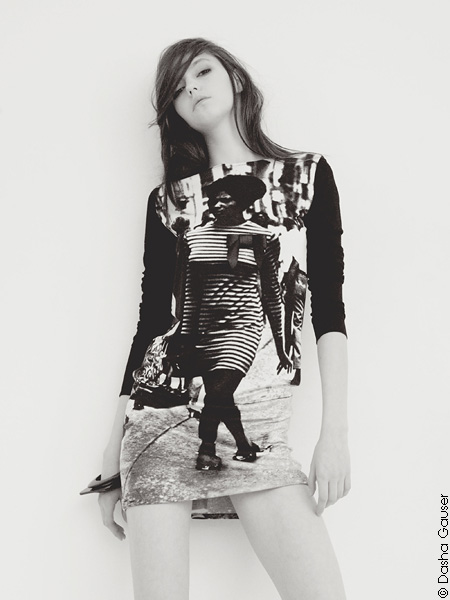
Dasha Gauser 
With avant-garde, progressive, and extremely elegant looks designer Dasha Gauser makes you feel as if you have just opened the curtain to the future of fashion.


Dasha Gauser's strong point is dresses. She makes sculpturing works!


Workshop: Moscow, Nizhny Susalny Lane, 5/10 (Arma Factory)
Stores: Moscow, Krasnopresnenskaya Quay, 16/1 (Bagration Bridge); Varshavsky Road, 87B, 1st floor 

Tuesday, May 11, 2010

Dion Lee

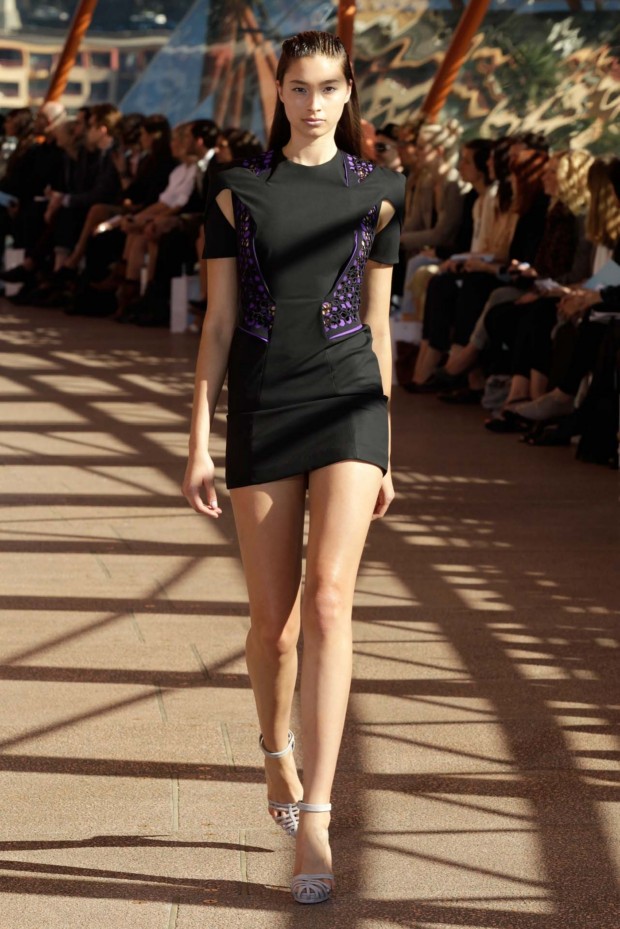
After getting my daily dose of Jack & Jill's blog last weekend, I found myself drooling over this delightful collection by australian designer Dion Lee. Drooling is an understatement when you see these beautifully constructed pieces (I'm not lying!).
So I've decided to compile some pictures of his recent SS 2010/11 collection, for you to meet this australian fashion genius.


Who's Dion Lee?
After unveiling his debut collection at RAFW, Dion Lee proved himself as a new designer to emerge from the Australian fashion industry.
The 22-year-old Sydney-based designer graduated from Fashion Design Studio, Sydney Institute of Technology in early 2007 and has already secured himself some stellar stockists to start selling his wares.
Inspired by the construction of clothing, the Lee's work focuses primarily on innovative cut and pattern making. Often woven and intertwined, the young designer utilises structured and fluid tailoring, transparency and opacity and functional detailing to create a modern balance of innovation and wearability.
Dion Lee's Spring/Summer 2008 collection was inspired by the functions of the human body, specifically the concept of mitosis. Using cell division to inform the construction of his designs, layers divide and separate in two, creating graphic, cell-like shapes and functions.
A relative newcomer on the local fashion scene, Lee already holds impressive credentials, having gained industry experience working with Tina Kalivas, and has acquired a host of awards including the 2007 Crosier Eveningwear Award. Watch this space!


Source: Vogue Australia